
Being human in the time of neuroscience and artificial intelligence involve carefully exploring the nexuses of complexity where valid ideas are nevertheless in tension, manifesting subtleties and challenges that must not be overlooked. Each page expresses the existing tension(s) between ideas and within each theme, which emerged in the collective discussions, and are then complemented by insights from NHNAI network researchers.
Complexity on democracy #7: Defending human uniqueness in the age of human-mimicking machines
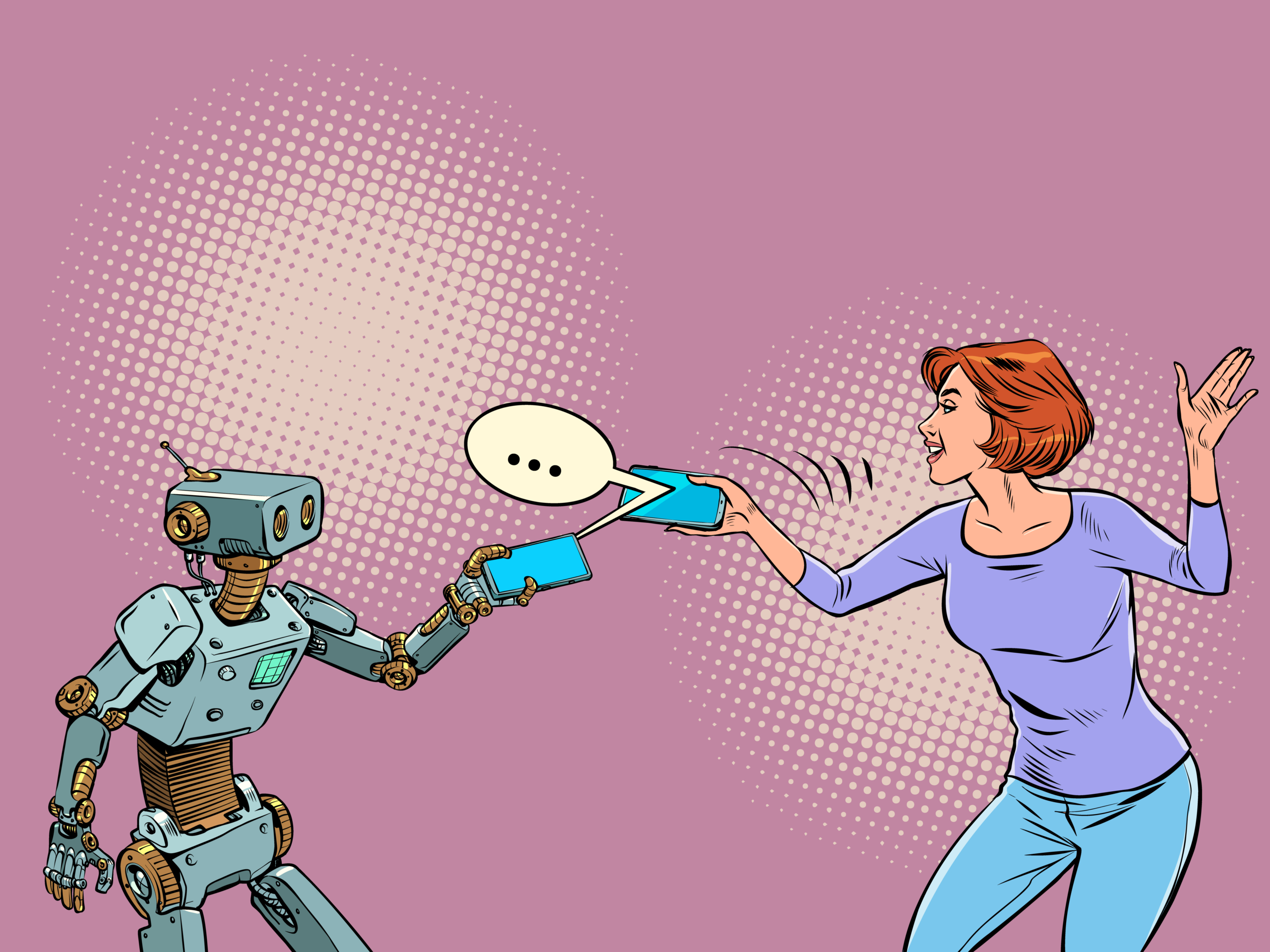
Participants highlight the importance of preserving certain values and features that are unique to humanness, like spirituality, wisdom, emotionality, creativity, autonomy, critical thinking, imagination, consciousness, empathy… and others. Some of these abilities are key within our democratic and legal systems and cannot be genuinely reproduced by machines. It is for instance the case of empathy and listening when difficulties and complexity appear during a court or in a difficult legal situation.
Nevertheless, participants worry about the growing challenge of distinguishing between humans and machines, as well as between real and fake digital content (such including AI generated content presented as human made). Even if legal regulation would impose to inform citizens when they interact with AI systems or AI generated content, it might become difficult to preserve and defend our human uniqueness if the human-mimicking abilities of machines continue to grow. The problem seems already there concerning creativity.
Insights from NHNAI academic network:
Philosophical literature has often focused on the issue of the supposed similarities between human beings and machines. In fact, one of the reasons why Artificial Intelligence was first invented and then developed was precisely the curiosity and ambition to find out whether it was possible to create an algorithm capable of answering a series of questions as a human would — and in such a realistic way that it could even deceive a human examiner. This was the question that prompted Alan Turing to conceive his famous Imitation Game (Turing, 1950).
On the other hand, even if we assume — without conceding — that an algorithm is capable of passing the Turing test, which, as is well known, requires very specific experimental conditions (such as the machine being placed in a room separate from the examiner), this does not mean that a machine can be substituted for a human being without anyone noticing. As the biologist Giuseppe Longo observes, there is an irreducible gap between an imitation and the phenomenon it imitates — between a machine and a living being (Longo, 2021).
Even the most sophisticated image recognition algorithm must perform a complex classification process before learning to recognize a cat, whereas a child is able to do so after seeing one just once. That experience (seeing a cat for the first time) generates emotions in the child — such as curiosity or fear — which a machine cannot feel.
Longo’s account of the difference between human beings and machines corroborates the above thesis, formulated by the participants in the debate, according to which there are features that are unique to humans.